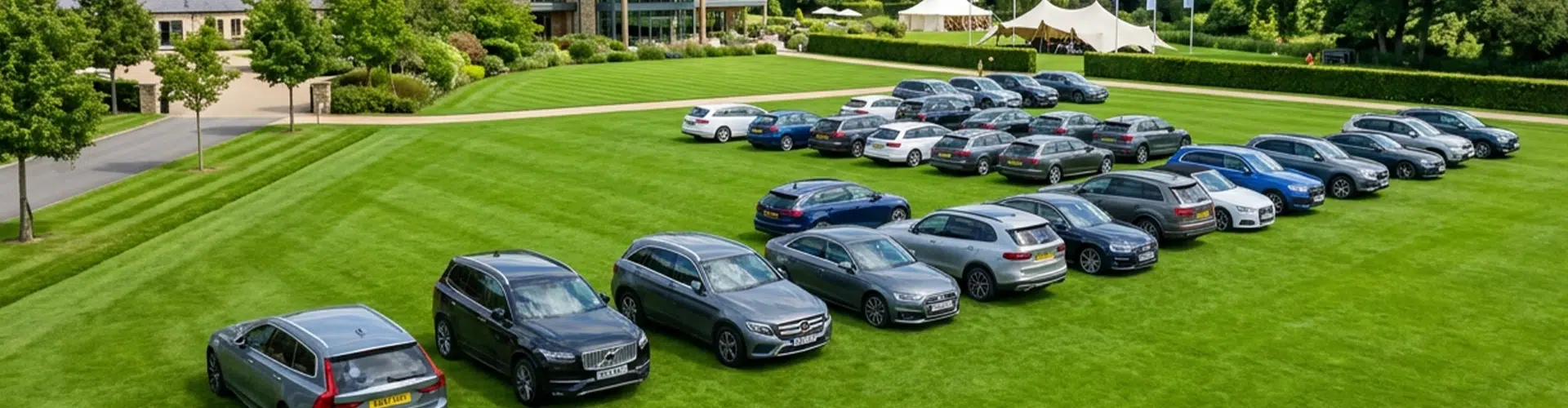
A permeable car park is not simply a surface material. It is a complete pavement system whose long-term performance depends on the surface course, the underlying drainage structure and the intended use of the parking area.
A landscape architect designing a business park faces different constraints from a civil engineer specifying a public car park or a contractor delivering a commercial development.
This technical comparison reviews the main permeable surfacing systems available within the Nidaplast range, assessing them against the practical criteria that matter most during design, construction and long-term operation.
Choosing permeable surfacing for a car park: 5 key considerations
Use: select the surfacing according to traffic intensity, vehicle types and circulation requirements.
Water management: assess the infiltration capacity of the surfacing, as well as that of the ground and sub-base, which determine the overall hydraulic performance.
Load resistance: design the structure according to expected loads, traffic frequency and operating conditions.
Landscaping: choose between a grassed, gravel or paved finish according to landscaping objectives, the biotope area factor (BAF) and maintenance requirements.
Overall design: permeable surfacing does not work in isolation: the foundation, subgrade and, where necessary, drainage or temporary rainwater storage must be integrated from the design stage.
*Indicative BAF values depending on the selected infill material and local planning methodology.
**UHI : Urban heat island
Catalogue data: Nidaplast 2026. Infiltration rates measured by CERIB (January 2025) on a 1sqm test area. Mineral-filled systems unless otherwise stated. Vegetated values measured after full grass establishment.
Which permeable surface is best suited to your project?
Public spaces and civic developments: prioritising appearance and environmental performance
For public buildings, schools, cultural facilities, healthcare sites and commercial developments, the selected surface must combine structural performance, an attractive finish and compliance with local planning and sustainability objectives.
The Ocity PAV65 paving grid provides the appearance of a traditional paved car park while maintaining full permeability. CERIB testing recorded an infiltration rate exceeding 5.33 mm/s with mineral infill.
Where maximising green infrastructure and landscape integration is the priority, Nidagrass NG/NGR offers a fully grassed trafficable surface. As with any reinforced grass system, it is best suited to areas with moderate traffic and sufficient sunlight to maintain healthy vegetation.
Business parks and office developments
Corporate campuses, office parks and commercial premises require surfacing that combines durability with a strong environmental image.
The Nidagravel NG040 gravel reinforcement system offers one of the best compromises between load-bearing capacity and hydraulic performance. With compressive strength of up to 800 t/m² and an infiltration rate exceeding 5.5 mm/s, it is suitable for heavily used light vehicle parking areas.
When sustainability credentials or planning requirements favour vegetated surfaces, the Nidagrass range provides a fully grassed permeable parking solution while maintaining a natural landscape appearance.
Residential and landscaped applications
For residential driveways, private access roads, campsites, visitor parking and accessible parking bays, the Nidagravel 129/130/139/140 range provides an attractive landscaped solution.
Available in several colours to complement local aggregates, these lightweight recycled polypropylene grids require no permanent anchoring. With compressive strength up to 400 t/m² and CERIB-tested infiltration rates above 5.33 mm/s, they are well suited to light vehicle parking and low-traffic access roads.
Temporary and occasional parking
For temporary parking areas, event venues, emergency access routes or grassed areas that occasionally need to support vehicle traffic, the RG035 panel from the Nidagrass range can be installed directly onto existing grass with minimal ground preparation.
It is specifically designed to reinforce natural turf while reducing rutting during occasional vehicle use.
Urban heat islands (UHI): which permeable surface performs best?
Reducing urban heat island effects has become an important design objective for both public authorities and private developments.
Permeable surfaces help reduce surface temperatures through two complementary mechanisms.
Evapotranspiration
Evapotranspiration cools the surrounding environment through the evaporation of water retained within the growing medium.
This mechanism is unique to vegetated systems, making the Nidagrass range the most effective solution for reducing surface temperatures. Depending on weather conditions and published research, grassed surfaces can remain 10 to 15°C cooler than conventional asphalt during summer.
Surface reflectance
Light-coloured aggregates such as limestone or quartz used with NG040 or Nidagravel reflect significantly more solar radiation than dark asphalt, reducing heat absorption at the surface.
In both cases, the lightweight recycled polyethylene structure stores far less heat than conventional concrete paving or asphalt, further improving thermal comfort.
Key specification considerations
Before specifying a permeable paving system, three aspects should always be assessed.
Verify ground infiltration capacity
The permeability of the underlying soil determines how infiltrated water will ultimately be managed.
Ground infiltration testing is strongly recommended. Where the measured soil permeability is below 10⁻⁶ m/s, direct infiltration is generally unsuitable and the pavement structure should discharge towards a controlled outlet or temporary attenuation system such as Optibox.
Match the surface to expected traffic
Traffic intensity is one of the key criteria when selecting a permeable surface.
Grass reinforcement systems such as Nidagrass are generally recommended for occasional or moderate traffic where sufficient sunlight allows healthy vegetation growth.
For more heavily trafficked parking areas, gravel-filled systems such as NG040 or Nidagravel provide greater long-term durability while maintaining high infiltration performance.
Consider water quality
Where infiltrated water may affect groundwater protection zones or sensitive environments, local regulations may require hydrogeological studies or additional water treatment measures before infiltration.