At first glance, the answer seems straightforward: a permeable surface is one that allows water to pass through it. In reality, however, the situation is more complex. In the field of car park design, terms such as permeable, draining, porous and infiltrating are often used interchangeably, even though they describe different technical characteristics.
This confusion can lead to surfaces being described as “permeable” even when rainwater is ultimately collected and discharged into a drainage network. To understand the true performance of a car park surface, it is important to distinguish between several complementary concepts.
Permeable surfacing for car parks: 4 key principles
Permeable: the surface allows rainwater to pass through the material itself or through its joints.
Draining: the structure beneath the surface allows infiltrated water to flow through and drain away.
Infiltrating: the system allows rainwater to infiltrate into the natural ground where soil permeability and site conditions permit.
Overall design: hydraulic performance depends on more than just the surface: the subgrade, sub-base, drainage layers and the method used to discharge or temporarily store rainwater must be designed as a complete system.
Permeable, Draining and Infiltrating: Three Concepts Often Confused
A common misconception is that a surface is permeable simply because water disappears quickly from its surface.
In reality, three distinct characteristics must be considered.
A Surface Can Be Permeable
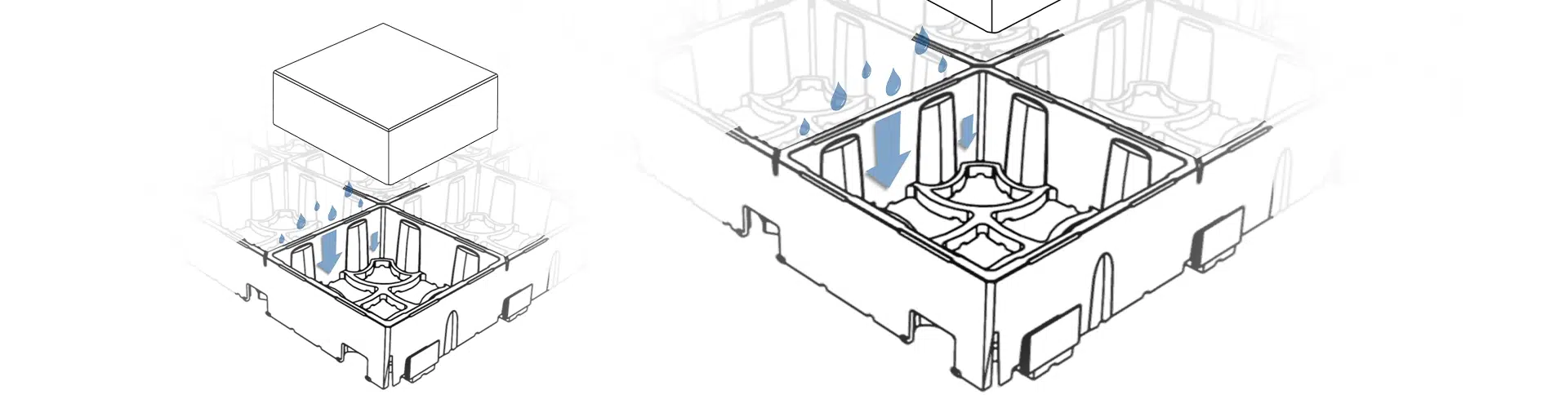
The surface itself allows water to pass through its structure or joints. This is the case with permeable block paving, grass reinforcement grids and certain porous paving materials.
A Structure Can Be Draining
Beneath the surface, the pavement structure may allow water to move through highly porous layers. Water is then conveyed through the sub-base towards an infiltration zone or an appropriate drainage system.
A Development Can Be Infiltrating
For a car park to genuinely support sustainable surface water management, rainwater must be able to reach the natural ground and infiltrate locally. Hydraulic performance therefore depends not only on the surface material itself, but also on the overall design of the system and the characteristics of the site.
A car park is not truly permeable simply because water passes through the surface. It is permeable when the entire system promotes infiltration and supports the natural water cycle.
What Is Permeable Car Park Surfacing?
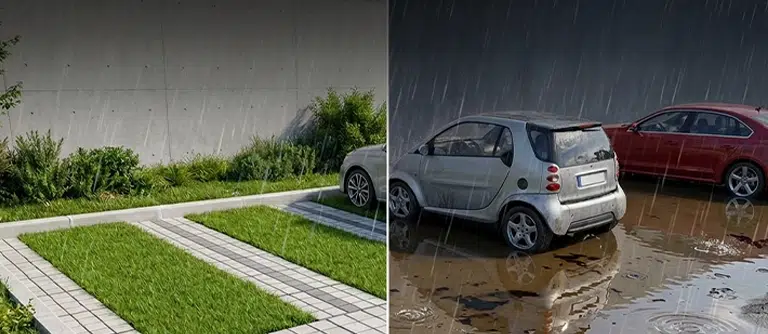
Permeable car park surfacing is designed to allow rainwater to pass through the surface and into the underlying layers rather than being immediately directed into conventional drainage networks.
This approach helps to reduce surface runoff, promote natural infiltration and support groundwater recharge where site conditions allow.
As rainfall intensity increases and urban areas continue to expand, permeable surfacing has become an effective solution for managing surface water at source while helping to reduce urban heat island effects and improve climate resilience.
The Main Types of Permeable Surfacing Used for Car Parks
Several categories of permeable surfacing can be used to reduce soil sealing and improve rainwater management. Although they operate differently, all aim to encourage infiltration and reduce runoff.
Permeable Block Paving and Paving Grids
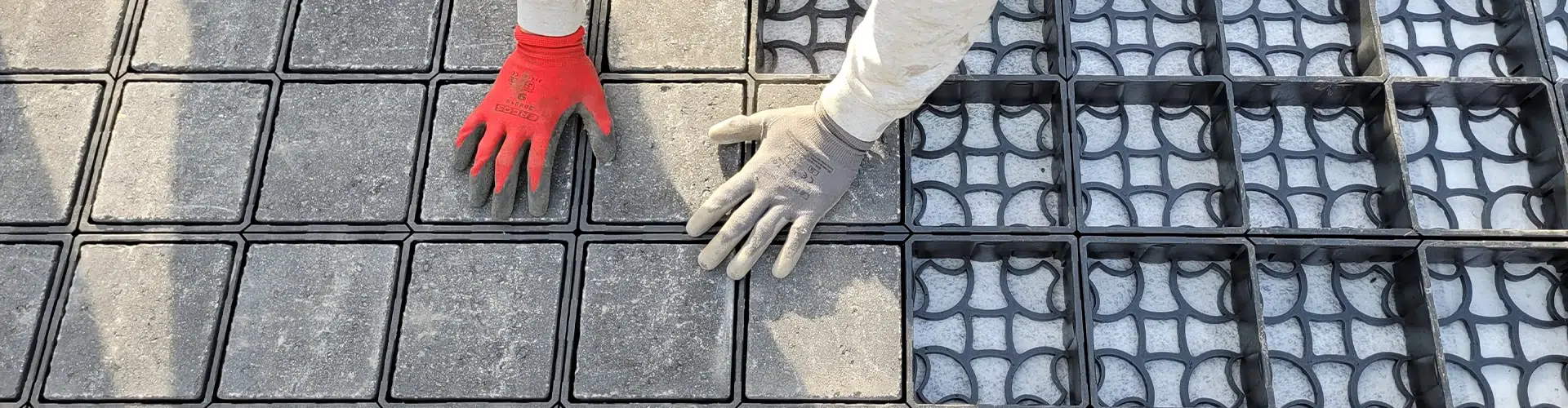
Permeable block paving systems allow rainwater to pass through widened joints or specially designed openings between paving elements. They provide a durable mineral finish while maintaining strong hydraulic and structural performance, making them suitable for public car parks, commercial developments and urban environments.
Grass Reinforcement Grids
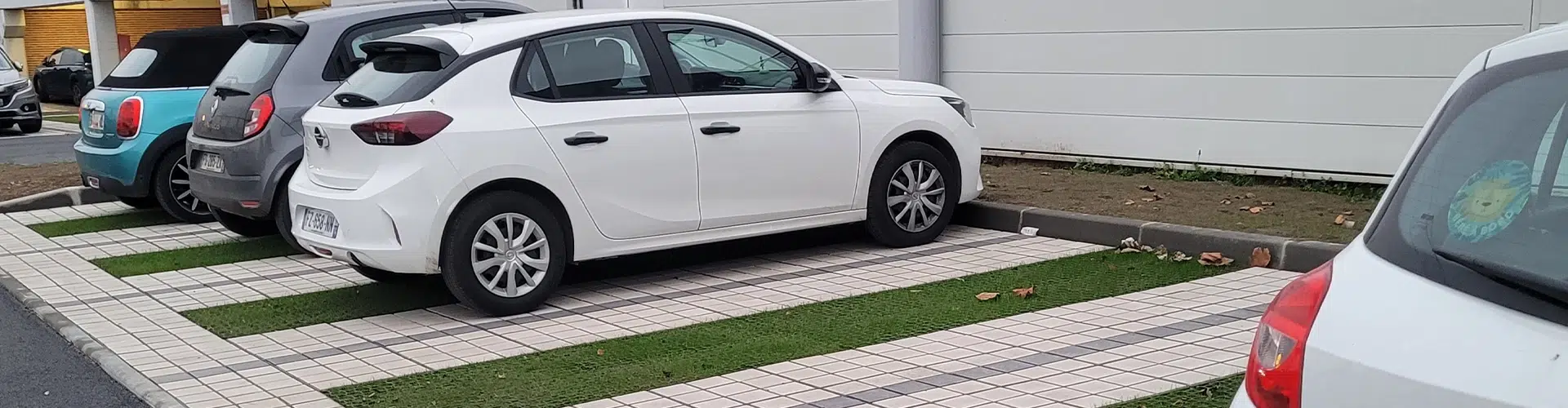
Grass reinforcement grids create trafficable surfaces while supporting vegetation growth. Filled with topsoil and seeded with grass, they help reduce soil sealing, improve landscape integration and minimise heat build-up. They are commonly used for landscaped car parks, overflow parking areas and environmentally sensitive developments.
Gravel Stabilisation Grids
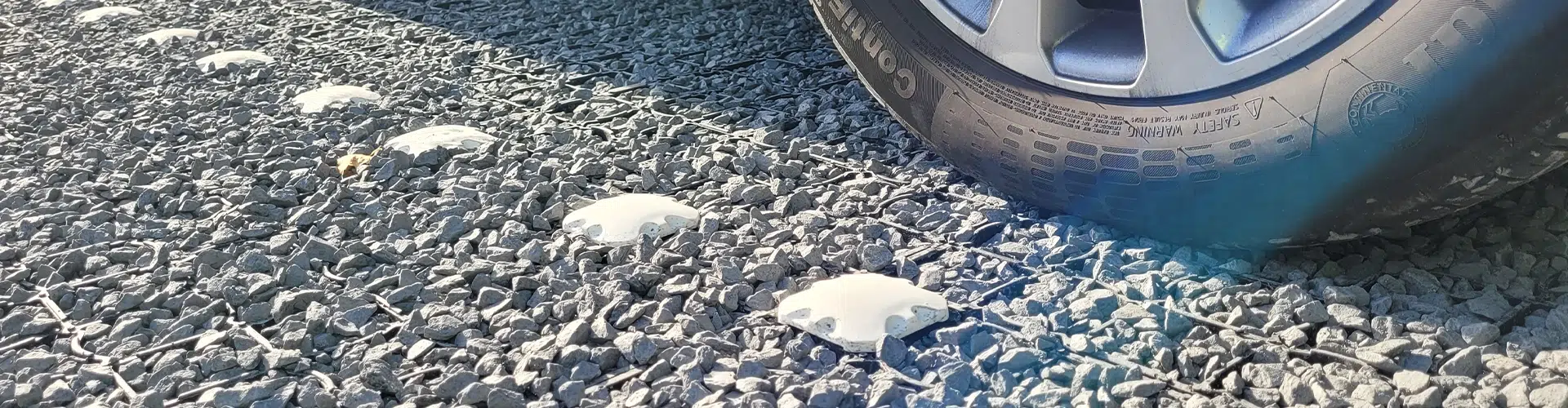
Gravel stabilisation grids keep aggregate in place while maintaining a permeable surface. They improve driving comfort, reduce rutting and ensure more even load distribution. These systems are particularly popular for landscaped parking areas, natural sites and projects seeking a discreet mineral appearance.
A permeable surface does not necessarily mean a permeable car park
Even the best permeable surface cannot perform effectively over the long term without an appropriate pavement structure beneath it.
The quality of the subgrade, the infiltration capacity of the ground, the design of the foundation layers and the overall surface water management strategy all have a direct impact on the performance of the development.
A permeable surface installed over a poorly designed foundation or on ground with limited infiltration capacity may not deliver the expected hydraulic performance.
A draining surface does not necessarily create a permeable car park
Some surfacing materials allow water to pass through the surface layer but are installed over a structure designed to collect and convey rainwater towards a drainage network or discharge point. In this case, the surface may be draining, but the car park does not necessarily support natural infiltration into the ground.
A porous material is not always infiltrating
A porous material can allow water to move through it while resting on an impermeable layer or a structure designed to collect and discharge surface water. The porosity of the surface alone is therefore not enough to determine the overall hydraulic performance of the car park.
A vegetated surface is not automatically permeable
Vegetation can improve landscape integration and contribute to better rainwater management. However, hydraulic performance also depends on the design of the foundation layers, the infiltration capacity of the soil and the way surface water is managed throughout the system.
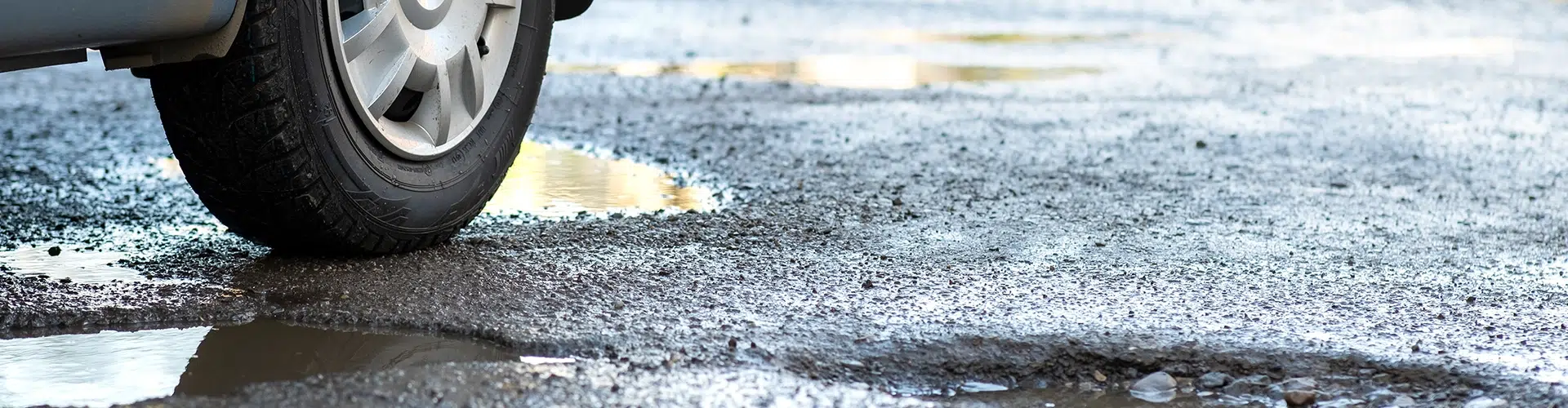
Conventional Asphalt and Concrete Car Parks Remain Impermeable
Traditional asphalt and concrete surfaces prevent water from infiltrating into the ground. Rainwater is instead collected on the surface and directed towards drainage systems or dedicated attenuation infrastructure.
Permeable or Impermeable? A Quick Summary
To determine whether a car park genuinely contributes to sustainable surface water management, it is important to look beyond the surface material alone.
A truly permeable car park generally combines all three characteristics: a permeable surface, a draining structure and an underlying soil capable of absorbing rainwater.
Materials Commonly Used for Car Parks
Many different materials can be used to create parking areas. However, not all provide the same level of performance in terms of surface water management.
Contrary to popular belief, a material is not automatically permeable simply because it contains vegetation, allows drainage or incorporates joints. The overall design of the system remains critical.
The table below compares the most common car park surfacing materials and their ability to support infiltration.
Actual permeability depends on the pavement structure, sub-base design and the infiltration capacity of the underlying ground.
Are All Permeable Surfaces Suitable for Car Parks?
The ability to allow water through is not sufficient on its own. A car park surface must also meet a range of structural and operational requirements to ensure long-term performance.
Resistance to Traffic Loads
Vehicles generate significant stresses during manoeuvring, braking and long-term parking. The surface must be capable of transferring these loads to the underlying structure without premature deterioration.
Surface Stability
Car parks must provide a safe, stable and comfortable surface for users. Rutting, settlement or movement of materials can negatively affect usability and durability.
Long-Term Hydraulic Performance
Permeability must be maintained despite traffic, sediment accumulation and weather conditions. Material selection and structural design play a crucial role in preserving infiltration performance over time.
Additional Considerations for Vegetated Surfaces
Grass-based systems introduce specific requirements. Vegetation performance depends on sunlight exposure, irrigation, soil quality and traffic intensity. These solutions are generally best suited to occasional parking, landscaped developments and areas with low traffic turnover.
Matching the Surface to the Intended Use
Residential car parks, commercial developments, event parking areas and emergency access routes all impose different requirements. The selected surface should therefore reflect anticipated traffic levels, loading conditions, landscape objectives and surface water management targets.
How to Choose the Right Surface for Your Car Park
Selecting the most appropriate permeable surfacing solution depends on several factors:
- Expected traffic levels;
- Landscape objectives;
- Desired level of vegetation;
- Maintenance requirements;
- Ground infiltration capacity;
- Local planning and drainage requirements.
A business car park, landscaped parking area, public facility or occasional-use parking area may require very different solutions.
Assessing technical, environmental and aesthetic constraints helps identify the most appropriate surfacing system for each project.
Five Common Misconceptions About Permeable Surfacing
"A vegetated surface is always permeable"
Pas nécessairement. La capacité d’infiltration dépend aussi des couches de fondation et du sol support.
"Porous asphalt is always a permeable solution"
Porous asphalt may drain water efficiently without allowing infiltration into the soil.
"All gravel car parks are permeable"
Without an appropriate structure, gravel surfaces can become compacted, clogged or installed over impermeable layers.
"Permeable surfaces cannot support heavy vehicles"
Many permeable systems are suitable for commercial vehicles, heavy loads and emergency access routes when properly designed.
"The surface alone manages rainwater"
Hydraulic performance depends on the soil, pavement structure and overall design of the development.
Conclusion
Not every surface that allows water to pass through can be considered permeable from a hydraulic perspective. To evaluate the true performance of a car park, the entire system must be considered: the surface material, the pavement structure, the infiltration capacity of the ground and the overall surface water management strategy.
Understanding the difference between permeable, draining and infiltrating systems enables more informed decisions and helps create durable car parks capable of supporting modern SuDS principles and sustainable surface water management.